
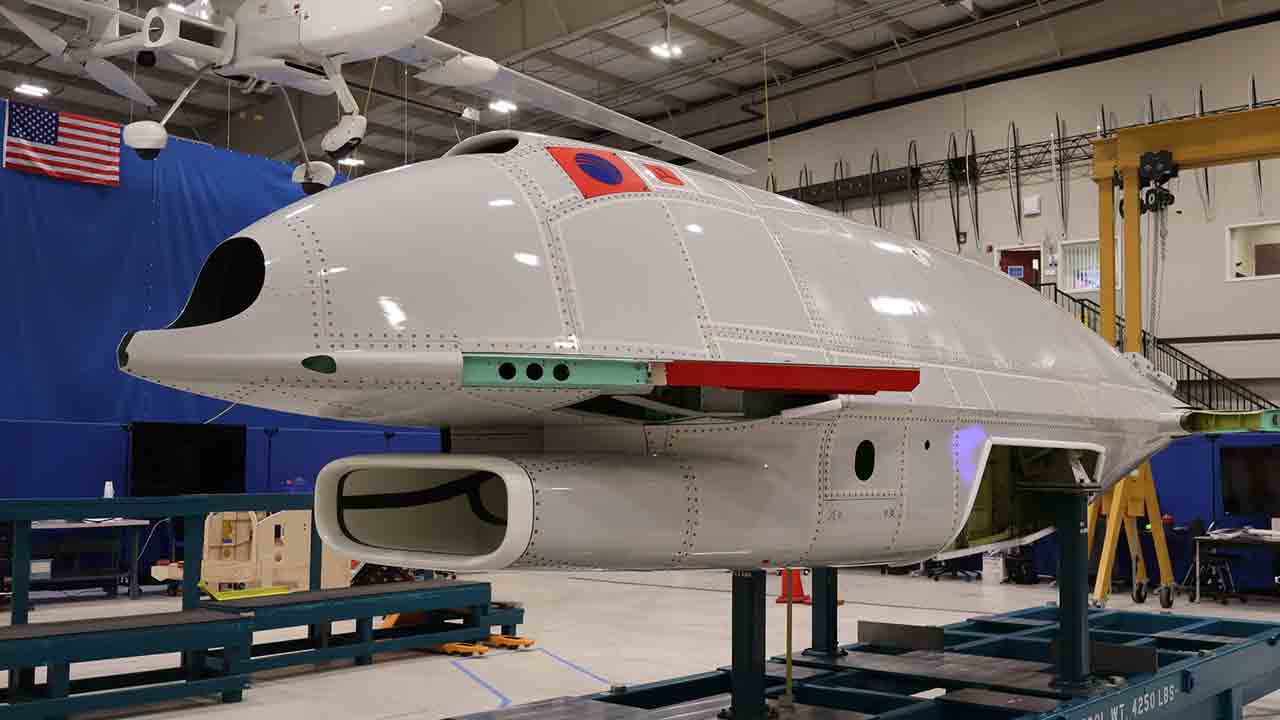
CRANE program enters a decisive phase as the fuselage reaches system integration; first flight of the demonstrator is scheduled for 2027
Aurora Flight Sciences reported that the fuselage of the X-65, an experimental aircraft developed under DARPA’s CRANE program, has been transferred to the final phase of system integration. This step marks an important transition in the project timeline, which aims to achieve the aircraft’s first flight in 2027.
According to the company, teams in Virginia are already working on installing electrical, propulsion, and active flow control systems, while the manufacturing of the wings and tail continues at the Bridgeport facility in West Virginia.
The X-65 is being developed to demonstrate active flow control technology in flight. The concept proposes replacing traditional control surfaces, such as flaps and rudders, with directed air jets capable of altering the aircraft’s aerodynamic behavior.
In practice, the idea is to allow the aircraft to perform flight commands and maneuvers without relying on conventional movable panels. Instead, attitude control is achieved by manipulating airflow over the aircraft’s surfaces.
According to Aurora, this approach can reduce structural weight, decrease mechanical complexity, and improve aerodynamic efficiency. If successful, the technology could influence the development of future military aircraft, unmanned systems, and research platforms.
The company highlighted that the X-65 is part of the Control of Revolutionary Aircraft with Novel Effectors program, known by the acronym CRANE, an initiative by the Defense Advanced Research Projects Agency aimed at validating active flow control under real flight conditions.
Aurora and DARPA signed a co-investment agreement in August 2025 to complete the aircraft and bring it to its first flight. Since then, the program has progressed through design reviews and entered full-scale manufacturing.
The fuselage, wing assemblies, and engine diffuser were produced at the company’s facility in Bridgeport. With the fuselage now transferred to Virginia, the project enters one of its most sensitive and decisive phases ahead of the flight test campaign.
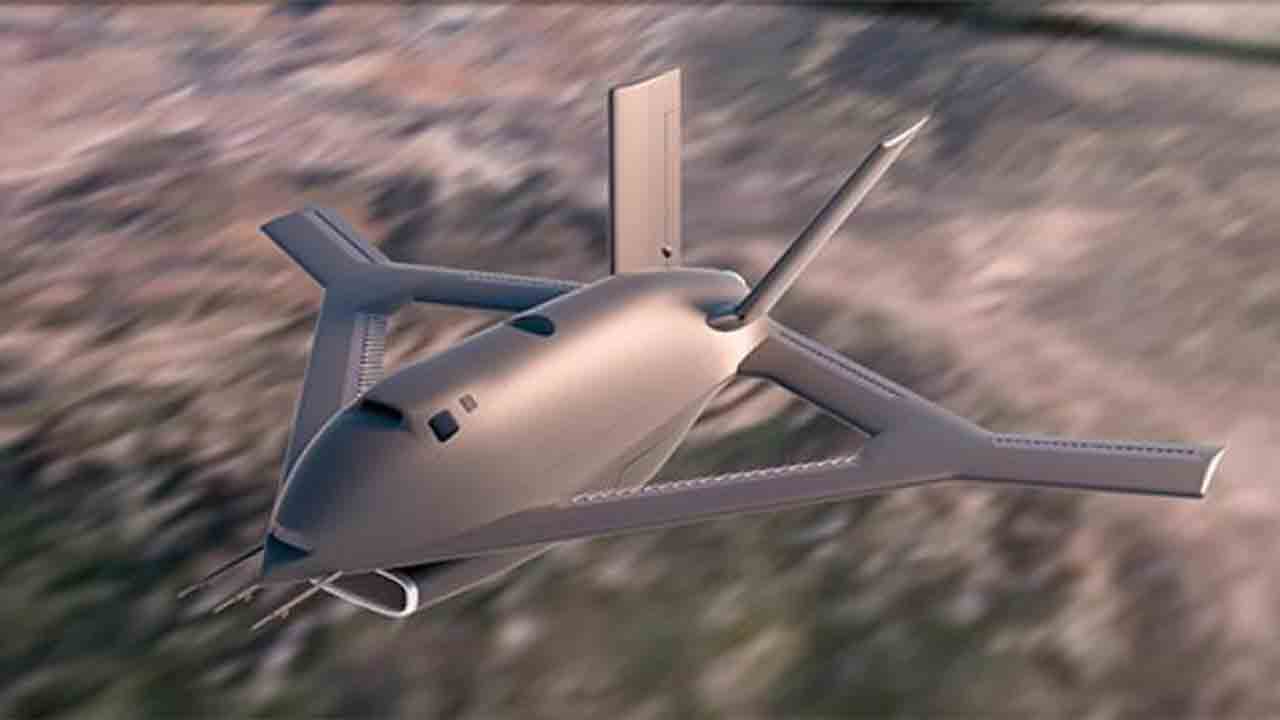
The X-65 was not designed as an operational aircraft, but as a dedicated technology demonstrator. The model has a 30-foot wingspan and a gross weight of 7,000 pounds, serving as a platform specifically for repeated aerodynamic and control system testing.
Its active flow control system uses pressurized air distributed through 14 effectors embedded in the flight surfaces. These air jets are designed to control pitch, roll, and yaw without the use of traditional moving control surfaces.
The triangular wing configuration and modular design will also allow engineers to test different wing sweep angles and replace the active control effectors with new solutions in future experiments.
In a statement, Larry Wirsing, vice president of aircraft development at Aurora Flight Sciences, said the company continues to advance its long-standing partnership with DARPA to complete the X-65 and demonstrate the capabilities of active flow control in flight.
With final system integration underway and other structures still being produced in West Virginia, the program is moving toward its first flight scheduled for 2027. The test is expected to represent one of the most significant milestones so far in evaluating the use of air jets as an alternative to conventional aircraft control systems.
Source and images: Facebook: AuroraFlightSciences | DARPA. This content was created with the help of AI and reviewed by the editorial team.
